Blizzard celebrated its 35th anniversary and the 30th anniversary of the Diablo franchise by sharing a variety of news with fans during its Spotlight week, including the reveal of the new warlock coming in the Diablo 4 expansion Lord of Hatred, who will also arrive in Diablo II: Resurrected and Diablo Immortal. Because the three games take place in different eras, players will soon be able to experience how the warlock changes across worlds and how the class is adapted to suit each title.
Alongside the Spotlight presentation, Blizzard announced the release of the warlock for Diablo II: Resurrected, and I had a chance to try the class ahead of its full debut. Test time was brief and the builds were pre‑set—three level 95 warlocks with fixed skills—so it was difficult to perform a detailed performance analysis, but even a short session was enough for the class’s overall feel and the revamped quality‑of‑life systems to make Diablo II feel distinctly different from the original. With the basic information from this hands‑on, I want to give a quick sense of how the warlock and these convenience updates change Diablo II, and readers can check more from Blizzard’s 35th‑anniversary Diablo showcase in related coverage.
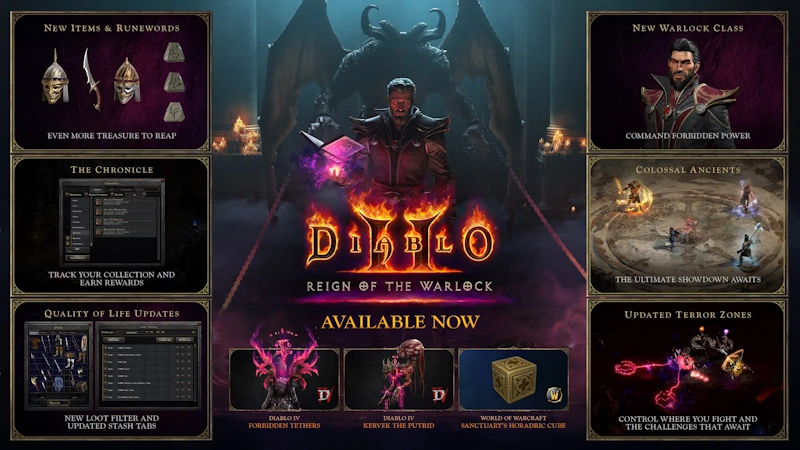
Table of Contents
A warlock using melee and magic
Unlike the versions already teased for Diablo Immortal and Diablo 4, the Diablo II warlock has a unique silhouette and weapon setup, wearing a shield or a class‑specific off‑hand roughly translated as “Occult Tomb,” a dedicated defensive item. The most distinctive trait is how the class uses weapons: instead of physically wielding them, the warlock levitates weapons with magic, allowing them to visually carry a two‑handed sword or staff in one hand while equipping a shield or occult tome in the other.
This is not quite the same as a Barbarian dual‑wielding two‑handed weapons, but the wider weapon options should make it easier to build around powerful runewords and legendary items. All three test characters wore a new unique Deathmark item, Hellwarden’s Will, which amplifies the warlock’s distinctive fantasy by granting bonuses to skill levels, faster cast rate, increased damage, and bonus damage. These item choices underscore that the warlock is not just a summoner: its skill tree is split into Chaos, Eldritch and Demon, and depending on how you invest points, you can become a pure caster, a melee damage dealer, or a demon‑focused summoner.
Because Diablo II only allows full respecs via limited Akara quest rewards and Tokens of Absolution, you cannot constantly reshuffle your build. Even so, you can use Akara’s rewards to pick a build that clears Normal and Nightmare more easily, then later switch into a gear‑dependent melee build once your items are in place.
Chaos build: screen‑filling magic

The Chaos build pushes the warlock into a caster role. Within this tree, there are three broad approaches: fire and magic damage spells such as Miasma, sigils that debuff or confuse enemies, and other destructive chaos magic.

The fire‑oriented setup is straightforward. Ring of Fire emits a short‑range ring of flames around the warlock, Flame Wave sends a long line of fire forward, and Apocalypse draws a pentagram that detonates for heavy damage after a brief delay. Flame Wave requires a short setup as the flame line forms, but once cast the projectile travels nearly to the edge of the screen, and the cooldown between casts is short enough that chaining it feels smooth. Apocalypse, meanwhile, has near‑screenwide coverage; it cannot be spammed, but its huge radius and attached fire‑resistance reduction make it ideal to pair with other fire spells.
The sigil‑type skills (Sigils) function somewhat like the Necromancer’s curses but are ground‑based: you place a sigil on the floor, and enemies standing within its area are affected. Different sigils can explode low‑health enemies, slow them, weaken them, or even cause them to attack each other, trading ease of use for powerful effects once mastered.
Miasma‑type skills focus on magic damage via toxic clouds. Miasma Bolt fires a small magic projectile that creates a poison cloud on impact, while Miasma Chain tethers an enemy and fills the space between the warlock and the target with poison. These are not ultimate skills themselves, and the build’s capstone is a passive that increases the area and damage of poison clouds; in the demo, they did not reach the raw burst of the fire spells, but because magic‑damage‑immune enemies are relatively rare, they should be very useful for “from scratch” characters pushing through Hell difficulty.
Eldritch build: cursed blades up close
In contrast to the summoner‑like key art, the Eldritch tree is built around melee damage, though not in a simple “one‑button smash” style. Instead, you repeatedly imbue your weapon with different hexes to layer various forms of damage and utility.
The three HEX curses—Bane, Purge and Siphon—temporarily enchant your weapon. Bane reduces enemies’ defense and attack rating, Purge applies a curse that causes enemies to explode on death, and Siphon lowers enemy damage while restoring the warlock’s life and mana when cursed enemies are killed.
A single cast of a hex lasts over 100 seconds at level 1 and marks damaged enemies for six seconds, so you do not need to recast constantly, instead refreshing when necessary. Both Bane’s basic attacks and Purge’s explosions deal magic damage, giving Eldritch builds some freedom against elemental immunities.

Core melee abilities include a sweeping attack that deals wide, low‑cost area damage, Mirror Blades, which duplicates your weapons to strike multiple times per swing, and Echoing Strike, a short‑range thrown attack whose blades return to the warlock. Despite a bit of ranged reach via Echoing Strike, your core damage comes from cursed melee hits, so survivability is a challenge.
To cover that weakness, Eldritch offers several defensive tools. Blade Warp throws a blade and teleports you to its location after a brief cast, serving as both mobility and escape skill, while Psychic Ward creates a short‑lived shield that absorbs attacks and can stun nearby enemies. Eldritch Blast is especially important: it damages cursed enemies, siphons life and mana, and refreshes hex durations, turning the warlock from a fragile melee fighter into a class that sustains itself by carefully maintaining curses. However, because you must both apply hexes and fight up close, the build will likely demand practice and mechanical familiarity.
Demon build: embodying domination
Most Diablo II classes eventually specialize in a single skill tree, but all three demo builds for the warlock invested at least a few points in the Demon tree because it is central to survivability. Both Chaos casters and Eldritch melee warlocks took basic demon‑summoning skills—Goatman, Corrupted, and upgrades like Demonic Mastery and Blood Oath. Summoned demons, like a Necromancer’s minions, roam around the player, attacking enemies and absorbing incoming blows. On top of this frontline tanking, the passive Pavise Blood Oath reduces damage taken by the warlock.
Demonic Mastery boosts demon attack speed, attack rating, damage and movement speed, while Blood Oath increases demon life, resistances, and physical damage reduction, and crucially redirects a portion of damage away from the warlock and onto their demons. At skill level 11 this transfer is about 25%, climbing to roughly 77% at level 37, making it an excellent one‑point investment once you have enough +skills from gear.
A demon‑focused warlock can lean even further into this path. Blood Boil bathes demons in burning blood that deals fire damage around them, and Endure (referred to as “Ingoji” in Korean) consumes corpses near demons to heal them, keeping your frontline alive. Consume sacrifices demons to grant the warlock bonus health or attributes, trading minions for personal power.
The core fantasy is realized through Bind Demon and Death Mark. Bind Demon enslaves wounded demons, granting them extra abilities and turning former threats into potent allies, perfectly matching the warlock’s theme of domination. Death Mark teleports your demons to your mouse cursor, enabling precise focus‑fire without relying on specific items or teleport runewords, unlike Necromancers who need Enigma or other gear to reposition minions efficiently. In the demo, the number of demons you could command was limited (roughly three at the shown mastery level), so the concentrated damage was more modest, but the control and safety benefits were clear.
Versatility and learning curve
At a glance, the warlock looks like a class that borrows bits and pieces from others—ranged casting, melee, summoning—but its implementation and underlying mechanics are different enough that understanding it is part of the fun. How quickly you internalize these systems will likely determine how powerful the class feels in your hands.

In the Chaos build, simply reading the tooltips and playing through the Sanctuary area posed little difficulty; with demons tanking in front, sigils on the ground, and Apocalypse applying fire‑resistance reduction, even Diablo went down smoothly. By contrast, the melee‑oriented Eldritch build felt much more punishing: mismanaging hexes and Eldritch Blast meant dying before even reaching Diablo, even though the build clearly had a high potential ceiling.
The demon‑centric build was extremely safe thanks to durable summons and precise repositioning via Death Mark, but pure demon damage alone felt underwhelming, suggesting the need for further experimentation to find optimal damage patterns. Overall, the warlock seems poised to look very different depending on whether you emphasize Chaos, Eldritch, or Demon, aligning with the developers’ comments that it is not easy to learn but becomes very strong when mastered.
Real quality‑of‑life upgrades for Diablo II
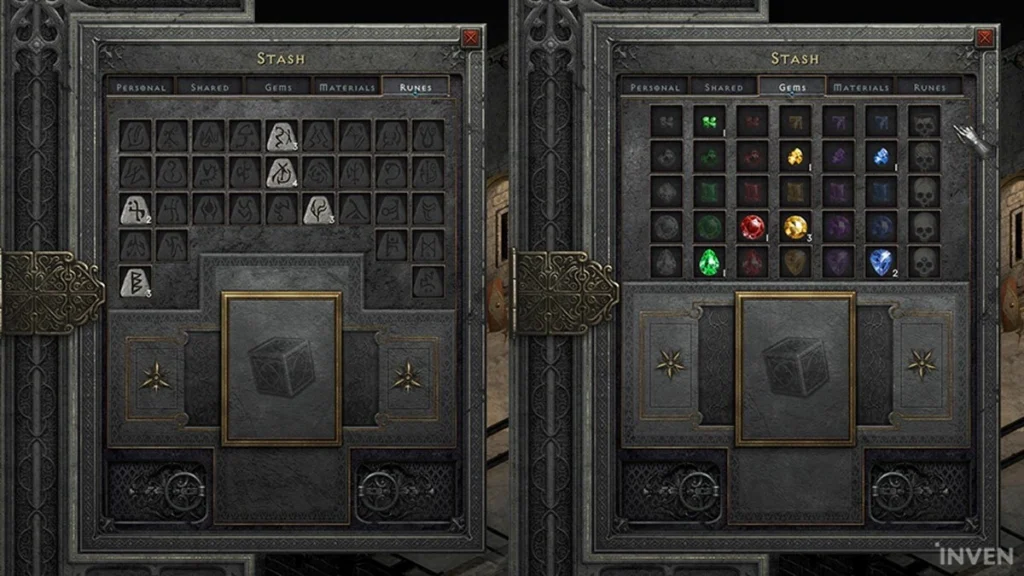
Beyond the flashy new class, Diablo II: Resurrected is finally receiving major quality‑of‑life improvements to its stash system. Gems, runes and various crafting materials now stack in dedicated tabs, eliminating the need for “mule” characters named after rune types. All gem types stack by tier, runes stack by rank, and even Tokens of Absolution, keys and vitality potions can stack, while the shared stash now has up to five pages, easing long‑standing storage constraints.
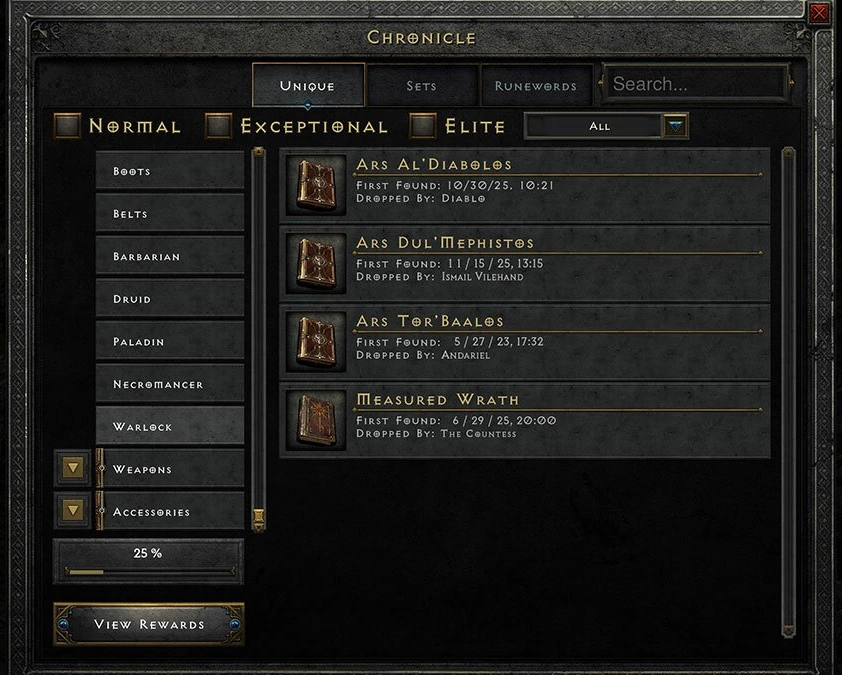
A new Chronicle system acts as a collection log: any item you obtain is automatically recorded with details like when and from whom you acquired it. This encourages you to discard items that only take up space, since their records persist for reference, and also offers collection rewards without turning Diablo II into a live‑service cash shop, something the developers have stressed they want to avoid.
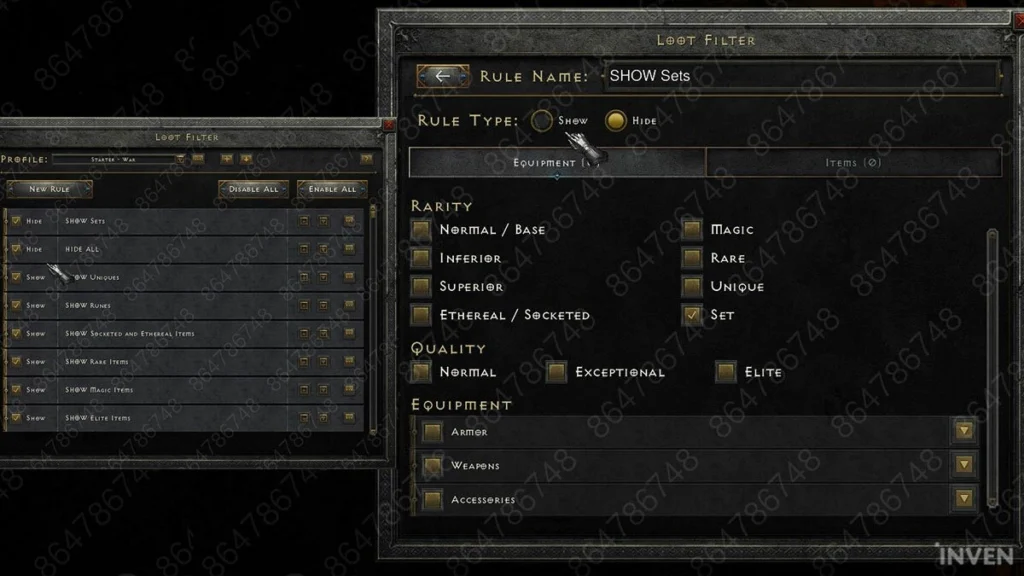
The new loot filter system is more powerful than expected. You can configure extremely granular rules by item rarity, tier, type and options—even potions—then save multiple rulesets to decide exactly what appears on the ground and what is hidden. For example, you can set the game to hide rare helms so they no longer appear when you press Alt, significantly reducing time spent picking up and checking junk drops.
A new item type, Worldstone Shards, further expands endgame play. Using one of the five shard types turns an entire act into a Terror Zone; defeating bosses there drops new statue items—such as Talic and Bul‑Kathos—that can be combined into materials for a new Uber boss encounter. The expansion of Terror Zones and the introduction of a new Uber boss promise fresh late‑game challenges for long‑time players.
The upcoming DLC will naturally attract attention for adding the first new class since the Assassin and Druid 25 years ago, but its extensive quality‑of‑life improvements also make Diablo II easier and more pleasant to enjoy. Rather than primarily targeting brand‑new players, this update looks like a substantial gift for those who have stuck with Diablo II or are considering a return from a long break.
Diablo II: Resurrected
- Developers: Blizzard Entertainment, Vicarious Visions
- Publisher: Blizzard Entertainment
- Director: Michael Bukowski
- Producer: Chris Lena
- Designer: Robert Gallerani
- Programmer: Matthew Bishop
- Artists: Chris Amaral, Dustin King
- Series: Diablo
- Platforms: Nintendo Switch, PlayStation 4, PlayStation 5, Windows, Xbox One, Xbox Series X/S
- Release: September 23, 2021
- Genres: Action role-playing, hack and slash
- Modes: Single-player, multiplayer
- The Practical Guide to Love Ending & plot summary & Cast

- Choi Gaon: Snowboard Halfpipe Olympic Gold Medalist, After Battling a Spinal Fracture
- Diablo 2’s New Character Update in 25 Years ‘Warlock’
- Single’s Inferno Season 5 Mina Sue Choi miss earth 2022, age, insta
- Single’s Inferno Season 5 Cast & Instagram